
Professor Dr Seemab Latif
Tenured Professor, Department of Computing, School of Electrical Engineering & Computer Sciences (SEECS)
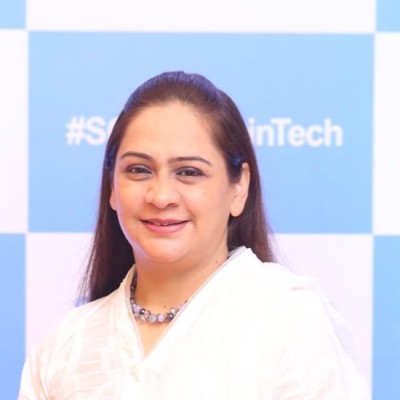
Dr. Seemab Latif is a Professor of Artificial Intelligence at the School of Electrical Engineering and Computer Science (SEECS), National University of Sciences and Technology (NUST). She is the Principal at NUST School of Interdisciplinary Sciences & Engineering (SINES) and has also served as Head of the Department of Artificial Intelligence and Data Science. She earned her Ph.D. in Artificial Intelligence from the University of Manchester, UK, with specialization in Natural Language Processing, Natural Language Understanding, and Natural Language Generation.
With more than 16 years of experience across academia, research, entrepreneurship, and industry, Dr. Latif has established herself as a leading voice in Artificial Intelligence, Explainable AI, Large Language Models, and AI for social and financial inclusion. Her research portfolio includes more than 70 publications in high-impact journals and conferences, spanning efficient Retrieval-Augmented Generation, AI for mathematics, NLP for under-resourced languages, and trustworthy AI systems designed for real-world impact.
Dr. Latif is actively engaged in equipping youth and educators with practical, hands-on AI skills. As a Meta AI Trainer, she has delivered AI training to non-technical university faculty, helping educators understand and adopt emerging AI tools. At NUST, she also conducts hands-on “AI for Classrooms” workshops, enabling university teachers to integrate AI effectively into teaching and learning.
Dr. Latif’s work sits at the intersection of advanced AI research, financial technology, gender equity, and public-sector innovation. As an entrepreneur, she founded Aawaz AI, an AI-based startup focused on RegTech and FinTech solutions that support women-led small businesses through AI-driven credit assessment and compliance technologies.
Her expertise has also informed major international development initiatives. As a consultant to the Asian Development Bank, she contributed to the design of gender-sensitive AI-driven financial platforms to improve credit access for women entrepreneurs across the MENAP region. More recently, she was invited to consult on the UNDP-PLEDGE project on a Gender Responsive Legislative Agenda, and provided consultation to UNDP-PLEDGE on enhancing Artificial Intelligence inclusion in digital governance and strengthening academic and technical support to provincial assemblies.
Recognised globally for her thought leadership, Dr. Latif has delivered keynote talks and participated in high-level forums around the world. At the United Nations General Assembly Science Summit, UNGA78, she spoke on “FinTech’s New Frontier: Erasing Gender Lines with Generative AI.” She also delivered a keynote address to young leaders from around the world on “AI as a Catalyst for Young Leaders” at the AI for Global Leaders Conference in Malaysia. Her work has been honoured through multiple awards, including best paper awards at international conferences and the University Best Innovator Award.
Deeply committed to education, institutional leadership, and community empowerment, Dr. Latif has played a central role in launching undergraduate and postgraduate programs in AI and Data Science at NUST.
Learning Outcomes:
- Hands-on AI for Teaching: Learn how to use AI for lesson planning, classroom activities, quizzes, rubrics, feedback, and discussion prompts without requiring any technical or coding background.
- Prompt Engineering for Educators: Learn a simple framework for writing effective prompts using role, task, context, constraints, and output format to generate classroom-ready material.
- Design AI-Ready Assessments: Redesign assignments and assessments to make student reasoning, reflection, process, and critical thinking visible, rather than relying only on AI detection.
- Responsible AI & Academic Integrity: Develop practical approaches for defining acceptable AI use, disclosure requirements, verification, and responsible student use in your courses.
- Work with Your Own Course Material: Get hands-on experience with tools such as ChatGPT and NotebookLM to turn readings, lecture notes, and course material into activities, study guides, questions, and teaching resources.